
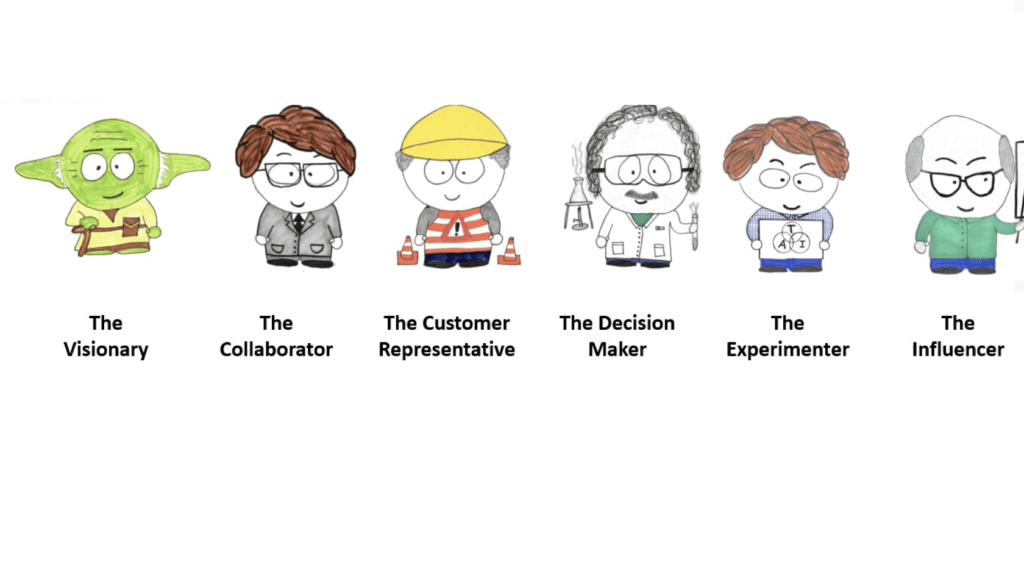
The Product Owner role has shifted from just being a requirements proxy to a strategic, data-driven leader. By leveraging AI Product Owner now automate backlog workflows, analyze massive data sets for feedback, generate and refine user stories, predict value delivery, and enable smarter decision-making—streamlining the entire product lifecycle. AI is transforming the AI Product Owner (PO) role, enabling unprecedented speed, accuracy, and strategic insight across backlog management, roadmap planning, customer feedback analysis, documentation, and value delivery. Adopting the right AI tools and workflows lets Product Owners become force multipliers—focusing on strategy and stakeholder value rather than manual, repetitive work.
AI-Powered Backlog Management and Prioritization
Manual backlog organization, prioritization, and grooming are often time-consuming. AI drastically reduces this burden by:
-
- Analyzing the entire backlog, categorizing items by theme, effort, and business value.
- Suggesting backlog priorities based on customer feedback sentiment, estimated ROI, and technical complexity.
- Identifying hidden dependencies and optimal sprint breakdowns using predictive analytics.
Step-by-Step Process:
Phase 1: Data Collection and Preparation
Gather Backlog Items
-
- Export existing backlog from Jira, Azure DevOps, or your current tool.
- Collect user feedback from support tickets, surveys, and sales conversations.
- Compile competitive analysis and market research data.
Standardize Data Format
-
- Use AI tools like ChatGPT to normalize backlog item descriptions.
- Prompt Example: “Standardize these backlog items using the format: Title | Description | Business Value | Effort Estimate | Priority Level”.
Phase 2: AI Analysis and Scoring
Apply AI Scoring Model
Tool: Zeda.io or custom ChatGPT prompt.
Input: Backlog items + historical sprint data + customer feedback.
Process: AI analyzes items based on:
-
- Customer impact (sentiment analysis of feedback).
- Business value alignment.
- Technical complexity estimation.
- Dependencies identification.
Generate Priority Matrix
AI Prompt: “Analyze this backlog and create a priority matrix based on Impact vs. Effort. Rank the top 20 items for the next 3 sprints, considering dependencies and team capacity of 40 story points per sprint.”
Phase 3: Validation and Refinement
Stakeholder Review Workflow
-
- AI generates summary reports for different stakeholder groups.
- Example Output: Executive summary focusing on business impact, technical summary for development team.
Continuous Learning Loop
-
- Feed sprint outcomes back into AI model.
- AI adjusts future prioritization based on actual delivery results.
Example:
Sarah, Product Owner at FinTech Startup.
Challenge: 200+ backlog items, unclear priorities.
AI Implementation: Used ChatGPT-4 with custom training on company data.
Process:
Fed 6 months of customer support data.
Applied weighted scoring: Customer requests (40%), Business value (30%), Technical debt (20%), Compliance (10%).
Result: 70% reduction in backlog grooming time, 25% improvement in sprint completion rate.
Recommended Tools:
| Tool | Key Feature |
| Jira AI | Smart backlog suggestions & prioritization |
| ProdPad | CoPilot for automated feedback analysis/prioritization |
| Zeda.io | Impact-First AI feature prioritization |
| Airfocus | AI-driven prioritization & roadmap scoring |
Automated User Story and Acceptance Criteria Generation
AI tools generate and refine user stories and acceptance criteria, ensuring consistency and clarity:
-
- Auto-generate user stories from business goals or feature ideas.
- Recommend acceptance criteria and test conditions based on best practices and prior sprint data.
- Maintain INVEST (Independent, Negotiable, Valuable, Estimable, Small, Testable) criteria across stories.
Step-by-Step Workflow:
Phase 1: Requirements Gathering
-
- Define Feature Context.
-
- Document business objective.
- Identify target user personas.
- List key user pain points.
-
- Define Feature Context.
-
- Create AI Input Template.
Context: E-commerce checkout optimization.
- Create AI Input Template.
-
- Users: First-time buyers, returning customers, mobile users.
-
- Pain Points: Cart abandonment (35% rate), payment failures, lack of guest checkout.
-
- Business Goal: Reduce abandonment by 15%.
Phase 2: AI Story Generation
-
- Generate Initial Stories.
-
- Advanced Prompt: “Generate user stories for checkout optimization. Include personas: first-time buyer, returning customer, mobile user. Address pain points: cart abandonment, payment complexity, mobile UX issues. Format: As a [persona], I want [goal] so that [benefit]. Include acceptance criteria for each story.”
-
- Generate Initial Stories.
-
- AI Enhancement Process.
-
- Step 1: Generate base stories.
-
- Step 2: AI refines language for clarity.
-
- Step 3: AI suggests edge cases and error scenarios.
-
- Step 4: AI validates INVEST criteria compliance.
Phase 3: Validation and Iteration
-
- Team Review Workflow.
-
- Development team estimates story points.
-
- UX team validates user experience assumptions.
-
- Business stakeholders confirm value alignment.
-
- Team Review Workflow.
-
- AI-Assisted Refinement.
-
- Refinement Prompt: “Based on team feedback, refine these user stories. Development says the payment integration is too complex for one story. UX suggests adding accessibility requirements. Business wants mobile-first prioritization.”
Example:
AI Product Owner – Mobile App Feature.
-
- Input: “Add social login to mobile app”.
-
- AI Generated Stories:
-
- “As a new user, I want to sign up with Google/Facebook so that I can quickly access the app without creating another password.”
-
- “As a returning user, I want to link my social accounts to my existing profile so that I can use either login method.”
-
- “As a security-conscious user, I want to see what data is shared when I use social login so that I can make informed consent decisions.”
-
- AI Generated Stories:
-
- Acceptance Criteria Auto-Generated: 15 detailed criteria covering happy path, edge cases, and error scenarios.
Example Prompts:
-
- “As a [user], I want to [do something] so that [benefit/value].”
-
- “Generate acceptance criteria for a payment workflow that must be completed within 2 minutes, and notify users of any errors.”
Recommended Tools:
| Tool | Functionality |
| ChatGPT/Gemini | AI-assisted story drafting. |
| PaceAI | Automated user story templates. |
| StoriesOnBoard | AI for story mapping and acceptance. |
| ClickUp AI | In-tool story & criteria generation. |
AI Enhanced Product Roadmap Creation and Communication
AI platforms aggregate inputs from stakeholder interviews, customer feedback, and market trends to:
-
- Create and continuously update product roadmaps.
- Visualize strategy, forecast delivery risks, and align teams.
- Assign weighted scores to features for smarter decision-making.
Step-by-Step Process:
Phase 1: Strategic Foundation
-
- Vision and Goal Definition
-
- AI Prompt: “Based on our company mission, customer feedback analysis, and competitive landscape, help me articulate our product vision for the next 12 months. Include 3-5 strategic themes and measurable goals.”
-
- Vision and Goal Definition
-
- Market and Competitive Analysis
AI Analysis Input:
- Market and Competitive Analysis
-
- Competitor feature releases (last 6 months).
-
- Market trend reports.
-
- Customer feedback comparative analysis.
-
- Technology trend assessment.
Phase 2: Feature Planning and Timeline
-
- Initiative Mapping
AI Process:
Input: Strategic goals + customer priorities + technical constraints
Output: Prioritized initiatives with effort estimates
-
- Timeline Optimization
-
- AI Prompt: “Given our team capacity of 3 developers, 1 designer, 1 QA, and these feature priorities, create a realistic 6-month roadmap. Consider dependencies and suggest optimal release sequencing.”
Phase 3: Stakeholder Communication
Audience-Specific Roadmaps
AI generates different views:
-
- Executive: Business impact and strategic alignment
-
- Development: Technical requirements and dependencies
-
- Sales: Feature benefits and competitive advantages
-
- Customer: Value delivery timeline and benefits
Regular Updates and Communication
-
- AI monitors progress and suggests timeline adjustments
-
- Automated stakeholder updates based on sprint outcomes
Example:
Enterprise Software Product Owner
-
- Challenge: Complex roadmap with 50+ features across 4 product areas.
-
- AI Implementation:
-
- Used ChatGPT to analyze customer requests, competitive intelligence, and technical debt.
-
- Generated strategic themes: Security Enhancement (35%), User Experience (25%), Performance (25%), Integration (15%).
-
- AI Implementation:
-
- AI Output:
-
- 12-month roadmap with quarterly milestones.
-
- Dependency mapping showing critical path.
-
- Risk assessment for each major release.
-
- AI Output:
-
- Result: 90% stakeholder alignment achieved, 30% reduction in roadmap revision cycles.
Recommended Tools:
| Tool | Roadmap AI Features |
| ProductBoard | AI insights for feedback and roadmaps. |
| Aha! | AI for prioritization and template-based planning. |
| ProdPad | Automated customer-centric roadmapping. |
| Airfocus | Live collaboration & AI prioritization. |
AI Driven Customer Feedback Analysis and Feature Prioritization
AI tools use NLP and sentiment analysis to:
-
- Aggregate and summarize feedback from emails, surveys, support tickets, and social media.
- Identify key pain points, feature requests, and sentiment trends.
- Suggest tailored product changes and measure impact.
Step-by-Step Implementation:
Phase 1: Data Aggregation
Multi-Channel Data Collection
Sources:
-
- Support tickets (Zendesk, Freshdesk).
-
- User interviews and surveys.
-
- App store reviews.
-
- Social media mentions.
-
- Sales call transcripts.
-
- Data Preprocessing.
-
- Remove duplicates and spam.
-
- Normalize language (fix typos, expand abbreviations).
-
- Tag data by source and date.
Phase 2: AI Analysis Pipeline
Sentiment and Theme Analysis
AI Process:
-
- Step 1: Sentiment scoring (-1 to +1 scale)
-
- Step 2: Topic clustering using NLP
-
- Step 3: Keyword extraction and frequency analysis
-
- Step 4: Pain point severity assessment
-
- Pattern Recognition
-
- AI Prompt: “Analyze this customer feedback data. Identify: 1) Top 5 pain points by frequency and severity, 2) Emerging trends in the last 30 days, 3) Feature requests with highest business impact potential, 4) Customer segments most affected by each issue.”
Phase 3: Actionable Insights Generation
Priority Scoring Algorithm
AI Scoring Formula:
-
- Priority Score = (Frequency × 0.3) + (Sentiment Impact × 0.25) + (Revenue Impact × 0.25) + (Strategic Alignment × 0.2).
-
- Automated Reporting.
-
- AI generates weekly trend reports.
-
- Alerts for sudden negative sentiment spikes.
-
- Recommended actions based on feedback analysis.
Example:
SaaS Platform Product Owner
-
- Data Input: 10,000+ support tickets, 500+ user interviews, 2,000+ app reviews
-
- AI Analysis Results:
-
- Top Pain Point: Mobile app performance (mentioned in 23% of feedback, -0.7 sentiment)
-
- Emerging Trend: Integration requests increased 40% in last 30 days
-
- Hidden Insight: Users who mentioned “slow loading” had 3x higher churn rate
-
- AI Analysis Results:
-
- AI Recommendation: Prioritize mobile performance optimization (projected 15% churn reduction)
Recommended Tools:
| Tool | AI Feedback Analysis Capabilities |
| Zeda.io | Voice of customer analytics, automated suggestion |
| Productboard | AI tagging & trend detection |
| Kindly.ai | Feedback summarization & sentiment analysis |
| Zendesk AI | Cross-channel sentiment & trend tracking |
Real-World AI Use Cases for AI Product Owner
Automated Voice of Customer Segmentation: Zeda.io and Product board AI extract insights from unstructured feedback (like support tickets and reviews), auto-tagging and surfacing consistently requested features or frequent issues. Product Owners use these insights to inform roadmap and backlog priorities.
Predictive Value Modeling: PriorityAI and similar tools simulate how new features could shift KPIs (such as retention, LTV, or conversion rate), giving objective, forecasted scores for strategic prioritization.
Release Impact Forecasting: AI-powered roadmap tools (Airfocus, ProdPad, Aha!) run scenario modeling—helping Product Owners see the potential impact of moving certain features up or down the roadmap, both technically and for business outcomes.
Acceptance Criteria Generation: StoriesOnBoard, PaceAI, ClickUp AI, and ChatGPT generate, standardize, and update acceptance criteria across features, ensuring compliance with company or regulatory templates.
Advanced Implementation Strategies
Multi-Model Decision Ensemble
Instead of relying on a single AI model, combine multiple approaches:
Ensemble Decision Framework:
-
- Model 1: Customer feedback sentiment analysis
-
- Model 2: Usage pattern predictive analytics
-
- Model 3: Market trend forecasting
-
- Model 4: Competitive intelligence analysis
Final Decision = Weighted average of all model recommendations
Contextual Decision Adaptation
AI models that adjust based on external factors:
Context Variables:
-
- Market conditions (bull/bear market)
-
- Seasonal patterns (holiday shopping, back-to-school)
-
- Company lifecycle stage (startup/growth/mature)
-
- Competitive landscape changes
Ethical AI Decision Making
Implement frameworks to ensure fair and unbiased decisions:
Ethical Checkpoints:
-
- Bias detection in data and models
-
- Fairness across customer segments
-
- Transparency in decision rationale
-
- Privacy protection in data usage
Conclusion
Adopting AI is no longer optional for Product Owners who want to stay competitive. From automating repetitive work and deriving insight from immense data, to improving communication and stakeholder alignment, modern AI tools empower Product Owners to deliver faster and with greater confidence. The key is to start experimenting: integrate one or two tools into your workflow, track outcomes, and adjust as you build “AI muscle” for your team and your product.
These detailed workflows demonstrate that AI is not just a productivity tool—it’s a strategic enabler that transforms how Product Owners work. By implementing these step-by-step processes, Product Owners can focus more on strategic thinking, stakeholder alignment, and value delivery while AI handles the analytical heavy lifting.
Start small, measure impact, and scale gradually. The future of product ownership is augmented intelligence—combining human strategic thinking with AI’s analytical power to deliver better products faster.
Remember: AI doesn’t replace Product Owner judgment—it amplifies it. The most successful implementations combine AI’s analytical power with human strategic thinking, domain expertise, and stakeholder empathy.
Tip: Focus first on your greatest time-drain (backlog grooming, roadmap planning, feedback review, documentation) and pilot the most relevant AI tool to unlock immediate value.
